What Is a REIT? A Beginner’s Guide to Real Estate Investing
If you’ve ever asked what is REIT, what are real estate investment trusts, or wondered how to invest in REITs, this guide is designed for you. REITs offer a way to invest in real estate without owning property directly, making them a popular option for beginners and experienced investors alike.
Introduction:
Real estate investing has long been associated with owning physical property—rental homes, apartment buildings, or commercial spaces. But not everyone wants the responsibility of managing tenants, maintenance, or large upfront costs. This is where REITs come in.
🏡 This Article Explains What REITs Are, How They Work, The Different Types of REITs, and How Investors Typically Use Them As Part of A Broader Financial Strategy.
What Is a REIT?
A REIT, or Real Estate Investment Trust, is a company that owns, operates, or finances income-producing real estate. Instead of buying a building yourself, you invest in a REIT and earn a share of the income it generates.
In simple terms, REITs allow individuals to invest in real estate the same way they invest in stocks—by purchasing shares.
REITs typically earn money through:
Rental income
Lease payments
Interest from real estate loans
Property appreciation
A defining feature of REITs is that they are required to distribute most of their taxable income to shareholders, often in the form of dividends.
What Are Real Estate Investment Trusts?
What are real estate investment trusts exactly? They are structured investment vehicles created to make real estate accessible to everyday investors.
To qualify as a REIT, a company generally must:
Invest the majority of its assets in real estate
Earn most of its income from real estate-related sources
Distribute a significant portion of its income to shareholders
Be managed by a board of directors or trustees
Because of these requirements, REITs are often associated with consistent income potential, especially compared to growth-focused investments.
How REITs Work
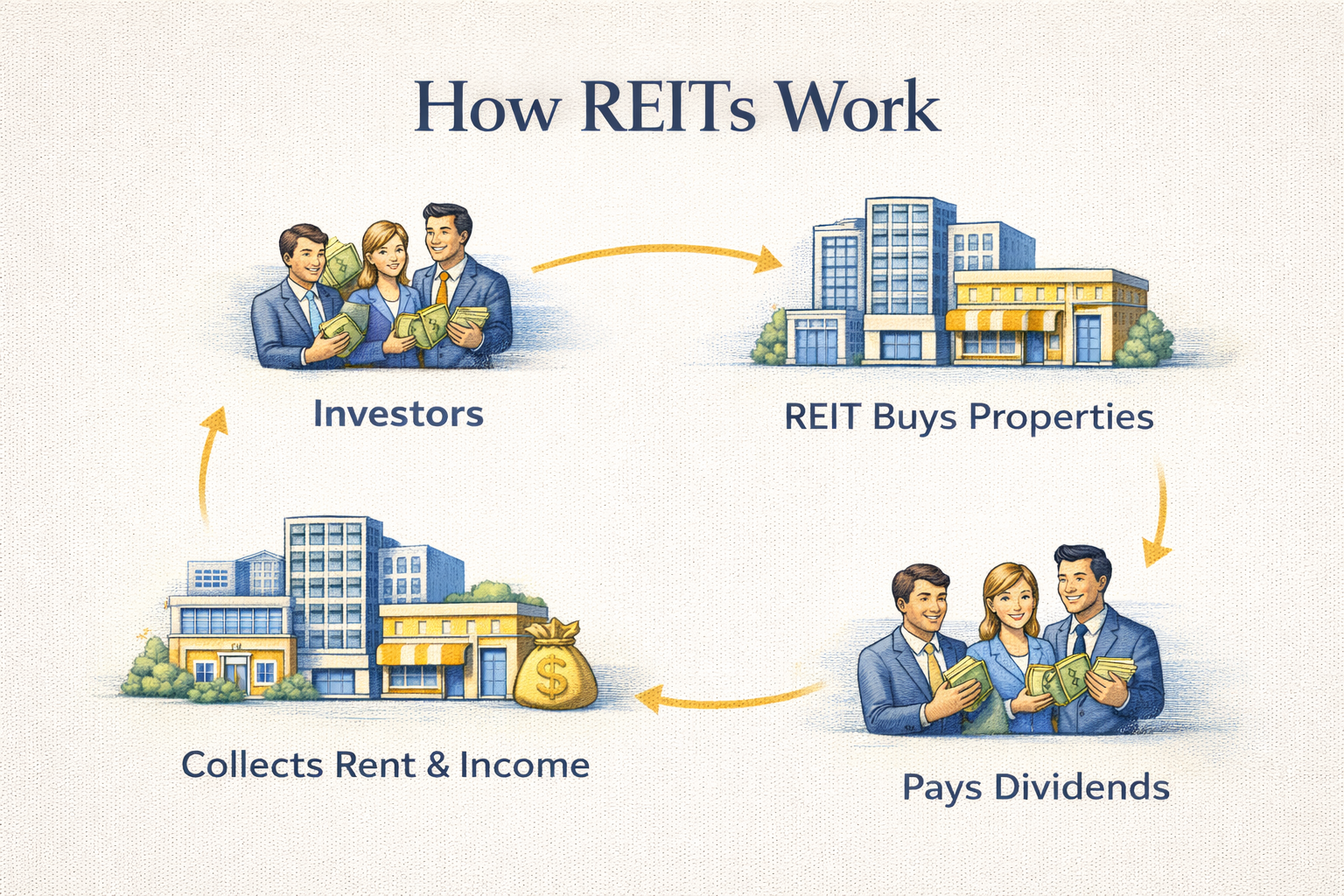
REITs pool capital from many investors to purchase or finance real estate assets. Investors then receive returns based on the REIT’s performance.
Here’s how the process typically works:
Investors buy shares of a REIT
The REIT uses that capital to acquire or finance properties
Properties generate income
Income is distributed to investors as dividends
Unlike owning rental property directly, REIT investors do not manage properties, screen tenants, or handle repairs.
Why Investors Choose REITs
REITs appeal to a wide range of investors for several reasons.
Accessibility
You can invest in REITs with far less capital than buying a property outright.
Diversification
REITs often own multiple properties across different locations and sectors, spreading risk.
Income Potential
Because REITs distribute income regularly, they are often used by investors seeking steady cash flow.
Liquidity
Publicly traded REITs can typically be bought or sold easily, unlike physical real estate.
Different Types of REITs
Understanding the different types of REITs is essential before deciding how to invest.
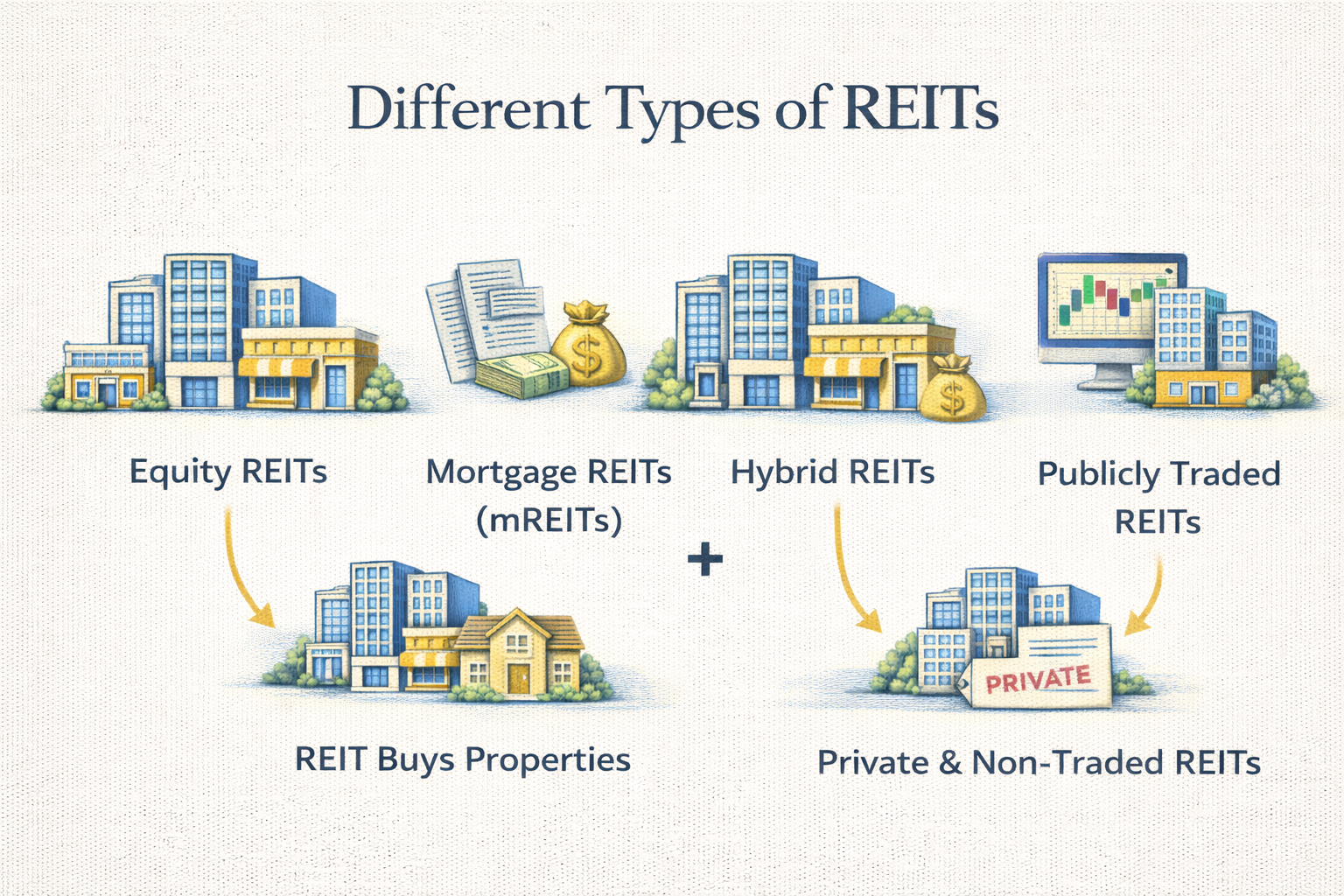
Equity REITs
Equity REITs own and operate income-producing real estate.
Common property types include:
Apartment buildings
Office buildings
Shopping centers
Industrial warehouses
Healthcare facilities
Income primarily comes from rent paid by tenants.
Best for: Investors seeking income and long-term exposure to property ownership.
Mortgage REITs (mREITs)
Mortgage REITs invest in real estate debt rather than physical properties.
They earn income from:
Interest on mortgages
Mortgage-backed securities
Mortgage REITs are often more sensitive to interest rate changes.
Best for: Investors comfortable with higher risk and interest-rate exposure.
Hybrid REITs
Hybrid REITs combine elements of both equity and mortgage REITs, owning properties while also investing in real estate loans.
Best for: Investors seeking blended exposure.
Publicly Traded REITs
These REITs trade on major stock exchanges and are the most common type investors encounter.
Advantages:
High liquidity
Transparency
Easier access
Private and Non-Traded REITs
These REITs are not traded on public exchanges.
Considerations:
Less liquidity
Limited transparency
Often higher minimum investments
These are typically suited for experienced or accredited investors.
REIT Sectors Explained
REITs are also categorized by property sector.
Popular REIT sectors include:
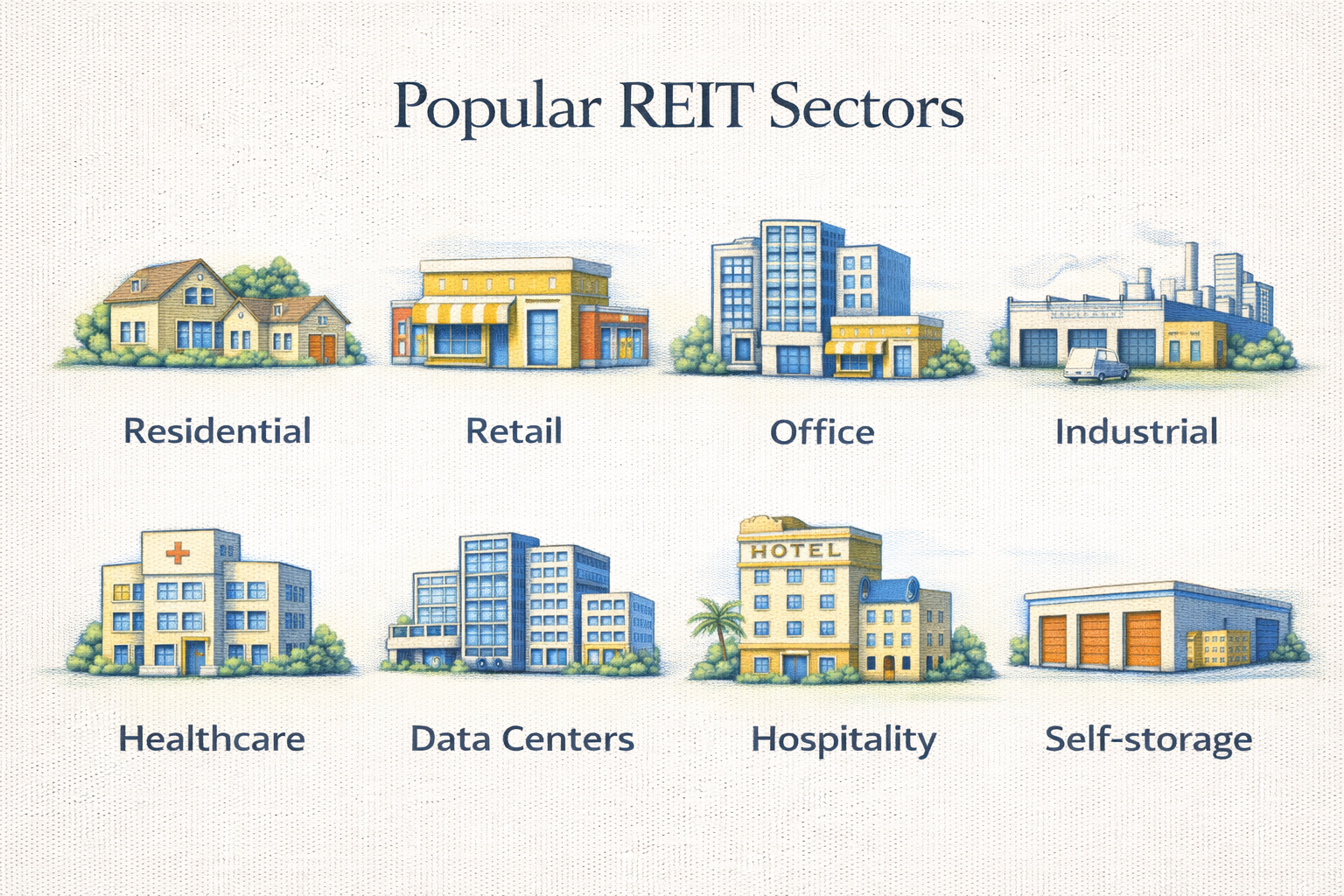
Sector performance can vary depending on economic conditions and consumer behavior.
How to Invest in REITs
If you’re wondering how to invest in REITs, there are several common approaches.
1. Buying Individual REIT Stocks
Investors can purchase shares of publicly traded REITs through brokerage accounts.
2. REIT Mutual Funds
These funds invest in a portfolio of REITs, offering diversification.
3. REIT Exchange-Traded Funds (ETFs)
ETFs track REIT indexes and are popular for beginners due to low costs and diversification.
4. Retirement Accounts
Many investors hold REITs in retirement accounts as part of a long-term income strategy.
REITs vs Owning Real Estate Directly
While both involve real estate, they serve different investor needs.
REITs:
Passive
Liquid
Lower entry cost
Direct Ownership:
Hands-on
Higher control
Potentially higher returns—but more responsibility
Many investors use REITs to complement direct property ownership rather than replace it.
Many investors use REITs to complement direct property ownership rather than replace it.
Advantages and Disadvantages of Investing in REITs
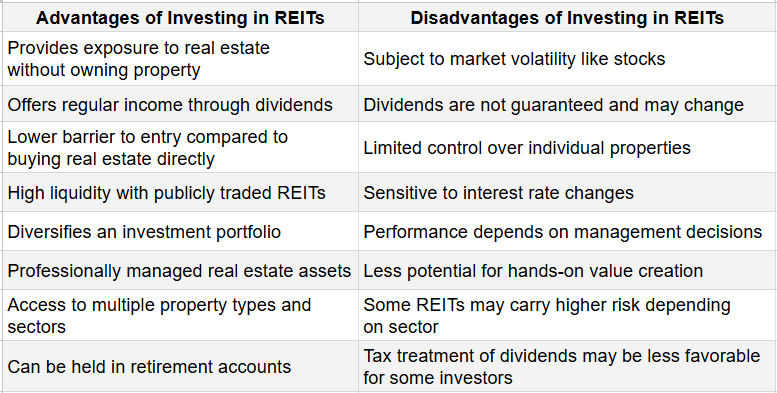
Understanding these risks helps investors make informed decisions.
How REITs Fit Into a Long-Term Strategy
REITs are often used to:
Generate income
Balance portfolios
Add real estate exposure without ownership
They can be especially useful for investors who want diversification without increasing personal workload.
Are REITs Beginner-Friendly?
For many people, yes.
REITs are often considered one of the most approachable ways to begin real estate investing because they:
Require less capital
Offer liquidity
Provide professional management
However, beginners should still research REIT types, sectors, and risks before investing.
Common Misconceptions About REITs
Some people assume:
REITs are risk-free
All REITs perform the same
REITs replace owning property
In reality, REITs are investments that require the same thoughtful analysis as any other asset class.
Donna Zona
203-619-3762
Representing Buyers and Sellers throughout CT
Results that will move you
Click the link for more real estate info!
Understanding what is REIT and what are real estate investment trusts opens the door to a flexible, accessible form of real estate investing. For those interested in learning how to invest in REITs, the key is alignment—matching REIT types, sectors, and strategies with personal goals.
REITs are not a shortcut to wealth, but they can be a valuable tool for building income, diversification, and long-term exposure to real estate. When used thoughtfully, they offer a way to participate in real estate without the responsibilities of ownership.
