

Results that will Move You
Navigating the real estate market doesn't have to feel overwhelming.
With over 18 years of experience serving Connecticut communities, I’m here to guide you every step of the way with clarity, care, and expert knowledge of the local market.
Once you understand the process and your options, you’ll feel confident making informed decisions—whether buying your first home, investing, or selling a property.
My mission is to empower you throughout your real estate journey, making the experience smooth, rewarding, and even enjoyable.
Let’s find the perfect place to plant your roots .
ESSENTIAL TIPS
FOR BUYERS AND SELLERS
IN CONNECTICUT
Here for You
Through Every Move
At Donna Zona Real Estate, you’re not just another transaction—you’re our top priority. I’m here to be your trusted advocate, helping you understand the real estate process and handling every detail so you feel informed, empowered, and supported from start to finish.
Whether you're buying, selling, or investing, I provide expert guidance, personalized strategies, and a streamlined process designed to help you reach your goals with confidence. With over 18 years of experience, I’ve had the privilege of helping countless families across Connecticut find their way home—and I’d be honored to help you, too.
📞 Let’s get started—reach out today!
GUIDES FOR BUYERS & SELLERS




DONNA ZONA REALTOR BLOG
Short-Term Rental: A Practical Guide for Property Owners
Short-term rentals have reshaped the way people think about real estate income. What once required long-term tenants and predictable leases has evolved into flexible, higher-income opportunities driven by travel, remote work, and changing lifestyle patterns.
Introduction:
Whether you’re considering renting out a second home, converting an investment property, or exploring new income strategies, understanding how a short-term rental works is essential before making a decision.
💰 In This Guide, We’ll Break Down What Short-term Rentals Are, How They Generate Income, How They Compare To Traditional Rentals, And What You Should Carefully Consider Before Entering This Market.
What Exactly Is a Short-Term Rental?
A short-term rental is a property rented out for brief stays, typically ranging from one night to a few weeks. Unlike traditional long-term leases, these rentals operate more like hospitality businesses than standard residential housing.
Common examples include:
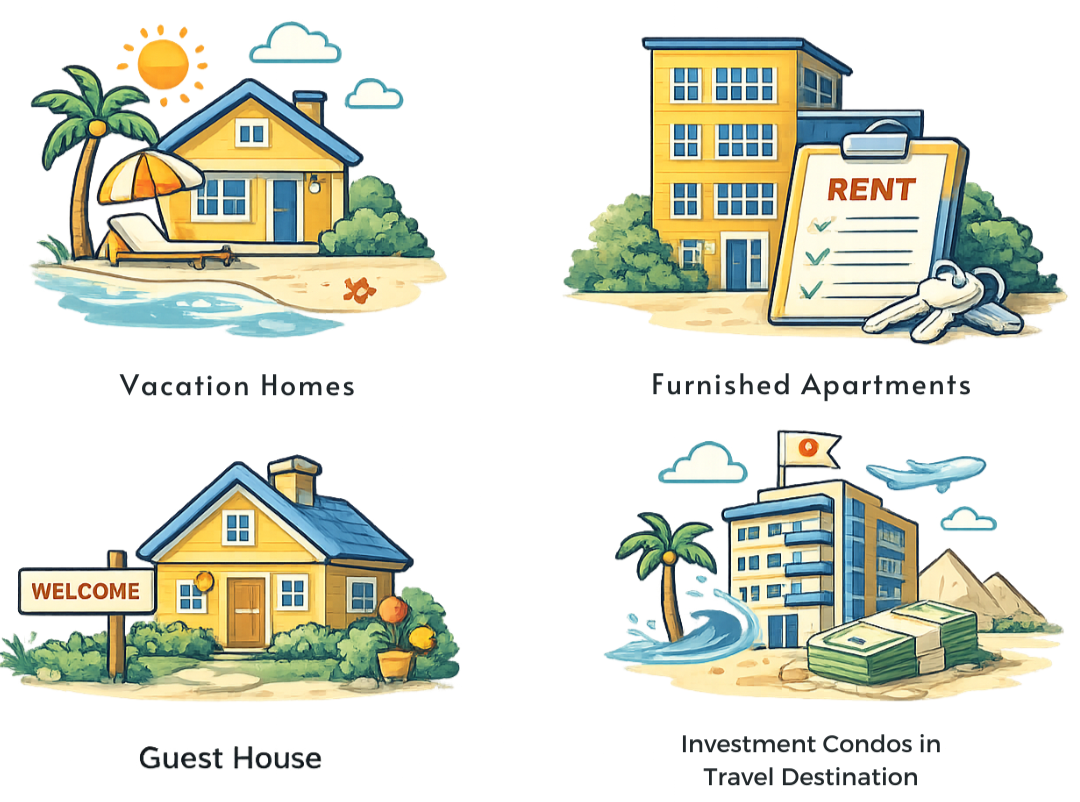
Short-term rentals are often listed on booking platforms and marketed toward travelers, business professionals, and temporary residents.
The key difference lies in duration. Instead of one tenant staying for 12 months, multiple guests rotate through the property throughout the year.
Why So Many Property Owners Are Exploring Short-Term Rentals
Interest in short-term rentals has grown significantly because of potential income advantages.
Some owners are attracted to:
Higher nightly rates compared to monthly rent
Flexibility to use the property personally
Seasonal pricing opportunities
Increased demand from remote workers
For example, a property that might rent long-term for $2,000 per month could generate more in certain peak seasons through nightly bookings.
However, higher potential income often comes with higher responsibility.
How Short-Term Rental Income Actually Works
Short-term rental income depends on several factors:


Unlike traditional leases with predictable monthly payments, income fluctuates. A property may be fully booked one month and partially vacant the next.
That’s why many investors carefully calculate expected occupancy rather than relying solely on maximum nightly rates.
The Difference Between Short-Term Rental and Long-Term Rental Strategies
Understanding the difference between a short-term rental and a long-term rental strategy helps clarify expectations.
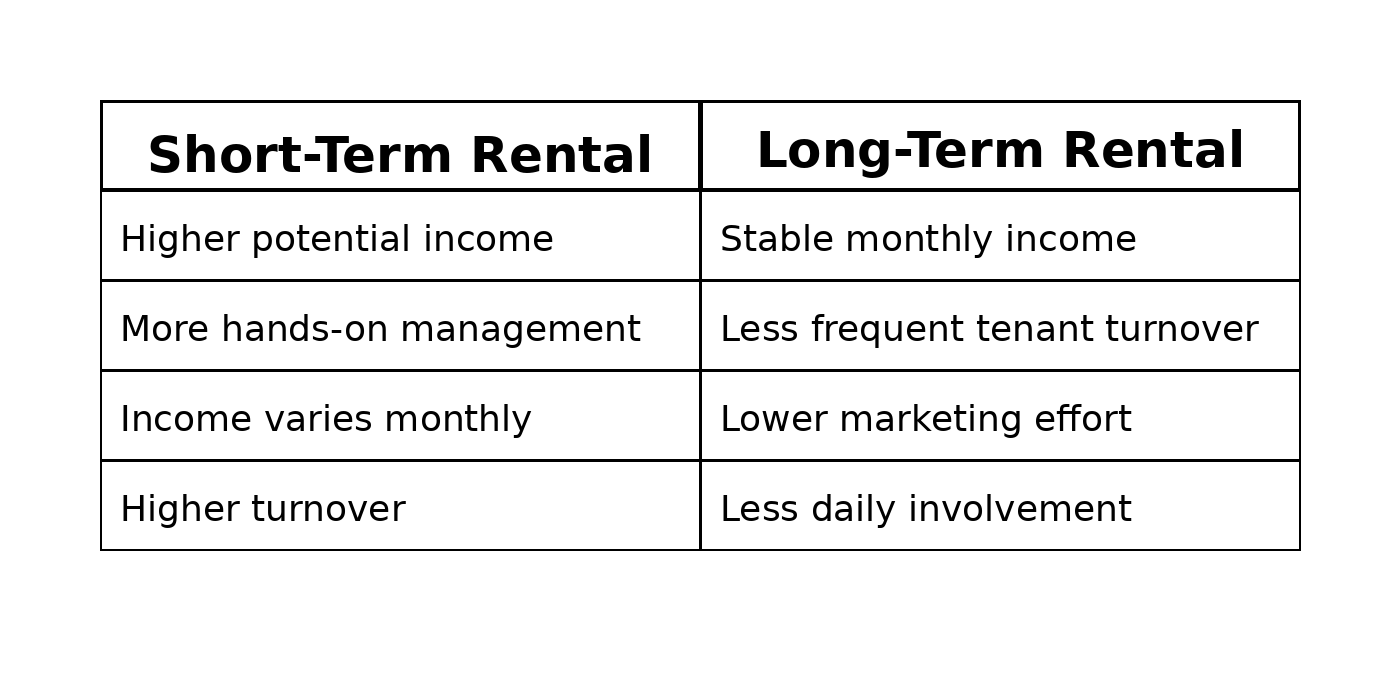
Both strategies can work well—but they require different levels of involvement and risk tolerance.
What Expenses Should You Expect With a Short-Term Rental?
Many first-time hosts underestimate operating costs.
Common expenses include:
Mortgage payment
Property taxes
Insurance
Utilities (often included for guests)
Cleaning services
Maintenance
Supplies and furnishings
Platform fees
Property management (if outsourced)
Short-term rentals often require more frequent cleaning and upkeep than traditional rentals.
Budgeting conservatively protects profitability.
Why Location Matters More Than Almost Anything Else
Location is critical in short-term rental performance.
Properties near:


tend to perform more consistently.
Investors often research occupancy trends in what are known as best short-term rental markets—areas where demand supports stable bookings year-round.
Even a beautifully designed property may struggle if located in an area with low short-term demand.
How Local Regulations Can Impact Your Investment
Before launching a short-term rental, it’s essential to research local regulations.
Many cities have:
Permit requirements
Zoning restrictions
Occupancy limits
Tax obligations
HOA restrictions
Failing to understand these regulations can result in fines or forced shutdowns.
Responsible investors verify compliance before purchasing or converting property.
What It Takes to Manage a Short-Term Rental Successfully
Managing a short-term rental resembles running a small hospitality business.
Responsibilities often include:
Responding to guest inquiries
Managing bookings
Coordinating cleanings
Maintaining supplies
Handling repairs quickly
Monitoring reviews
Positive guest experiences drive repeat bookings and strong ratings, which directly impact income.
Owners who prefer less involvement often hire property management companies, though this reduces profit margins.
How Cash Flow Works in Short-Term Rentals
Short-term rentals can produce strong cash flow—but only when occupancy supports expenses.
Key formula:
Income – Operating Expenses = Net Cash Flow
Because income fluctuates, conservative projections are essential. Many investors calculate expected occupancy at 60–75% rather than assuming peak performance year-round.
When managed carefully, short-term rentals can outperform traditional rentals in high-demand areas.
The Role of Furnishings and Design in Guest Appeal
Unlike long-term rentals, short-term rentals must be fully furnished.
Design influences:

Clean, neutral, welcoming spaces perform better than overly personalized interiors.
Investing upfront in durable furniture and thoughtful layout can improve long-term profitability.
How Seasonality Affects Short-Term Rental Performance
Seasonality plays a major role.
For example:
Beach properties perform best in summer
Ski properties peak in winter
Urban properties may see year-round business travel
Understanding seasonal trends helps set realistic income expectations and cash reserves.
Should You Finance or Pay Cash for a Short-Term Rental?
Financing impacts monthly obligations and risk tolerance.
Higher mortgage payments require higher occupancy to maintain positive cash flow. Some investors prefer larger down payments to reduce financial pressure.
Evaluating financing options carefully protects long-term sustainability.
Is Short-Term Rental Investing Right for Beginners?
Short-term rentals can work for beginners, but they require research and realistic planning.
Before starting, consider:
Do you have time to manage guests?
Are you comfortable with variable income?
Do local laws support the strategy?
Starting small and learning gradually often leads to better outcomes.
How Short-Term Rentals Fit Into a Broader Investment Strategy
Short-term rentals can complement other strategies such as:
Long-term rental properties
House hacking
Cash flow real estate investing
Vacation home ownership
Diversifying strategies helps balance income stability and growth potential.
Common Mistakes New Short-Term Rental Owners Make
Overestimating occupancy
Underestimating cleaning costs
Ignoring regulations
Pricing emotionally rather than competitively
Failing to maintain strong communication
Preparation and conservative planning prevent most early setbacks.
Donna Zona
203-619-3762
Representing Buyers and Sellers throughout CT
Results that will move you
Click the link for more real estate info!
Short-term rental investing can be profitable, flexible, and rewarding—but it requires thoughtful planning.
It’s not just about listing a property. It’s about understanding the numbers, the market, the responsibilities, and your long-term goals.
When approached strategically, short-term rentals can become a meaningful part of a diversified real estate portfolio.

CLICK THE VIDEOS BELOW TO LEARN MORE
ABOUT BUYING AND SELLING IN CONNECTICUT
Follow Me on Social Media For More Buying & Selling Tips!
At Donna Zona Real Estate, my goal is to create a seamless, supportive experience while building meaningful, long-term relationships within the communities I serve. With over 18 years as a REALTOR® in Connecticut, I’m committed to providing exceptional service tailored to your unique needs and goals.
Whether you’re a buyer, seller, or investor, my priority is to help you navigate the real estate process with confidence—and make it a smooth, rewarding journey from start to finish.
📞 Let’s connect today—I’m here to help you take the next step.

Facebook
Instagram
LinkedIn
Youtube